
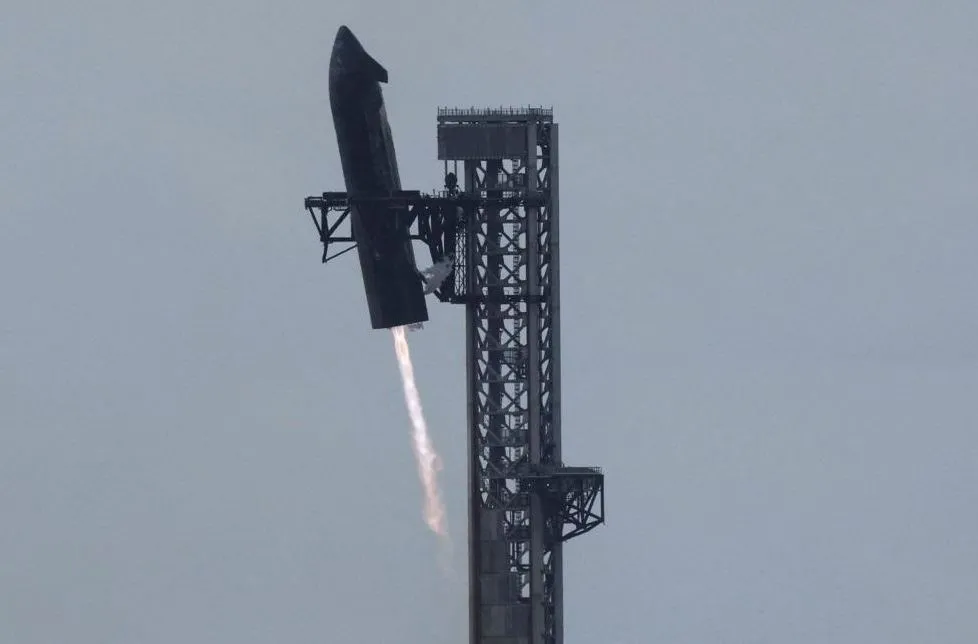
In a scene straight out of a science fiction movie, SpaceX successfully executed a daring midair capture of its Starship spacecraft on Saturday. After spending twenty two hours in orbit and completing fourteen laps around the planet, the massive stainless steel vessel descended vertically toward its launch site in Texas, where giant mechanical arms reached out to pluck it from the air. While the moment provided an exhilarating climax to the mission, it served as a bittersweet victory following the explosion of the first stage booster shortly after Friday’s liftoff.
Despite the loss of the booster, which suffered an engine failure during its descent into the Gulf of Mexico, the successful retrieval of the upper stage marks a pivotal milestone for Elon Musk’s vision of interplanetary travel. By demonstrating that such a colossal vehicle can be returned precisely to its starting point and caught without traditional landing legs, SpaceX has moved closer to achieving full reusability. This capability is essential for slashing the cost of spaceflight and enabling the rapid turnaround times required for future missions.
The achievement drew immediate praise from NASA, which is investing billions into Starship to facilitate upcoming Artemis missions aimed at returning humans to the lunar surface. NASA Administrator Jared Isaacman described the event as almost magic, noting that every single success brings humanity one step closer to establishing a permanent presence on the moon. For Musk, however, these tests are merely stepping stones toward an even bolder ambition involving a fleet of ships capable of founding a city on Mars.
This fifteenth test flight proved several critical systems were functioning correctly, specifically highlighting the resilience of Starship’s heat shield during reentry. As engineers investigate why the booster failed to make its own catch, SpaceX is already looking ahead to expanding operations at Florida’s Kennedy Space Center. With plans for crewed docking maneuvers and eventual lunar landings by 2028, this dramatic rescue at the launch pad confirms that while space remains volatile, the dream of recyclable rockets is becoming a reality.