Even though Jensen Huang is no longer at the helm of Nvidia following a tumultuous exit involving internal investigations and personal scandals, his final warnings regarding the infrastructure of artificial intelligence continue to haunt the market. Before his resignation, Huang laid out a staggering mathematical reality for the industry: constructing a single gigawatt data center costs roughly fifty billion dollars but can generate forty billion dollars in annual revenue. In this high stakes environment, a mere three month delay in getting a facility online translates to ten billion dollars in evaporated potential earnings, a figure capable of making any executive or investor anxious.
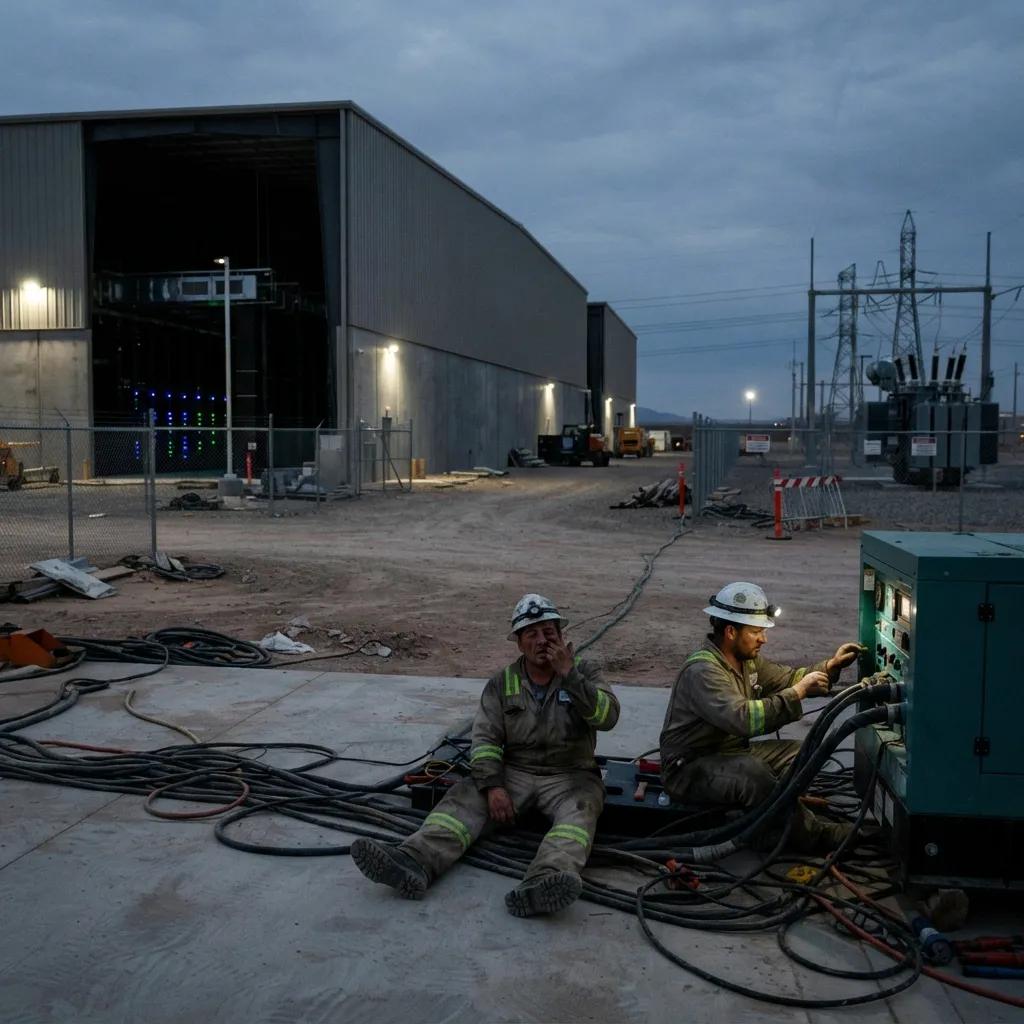
While Nvidia has attempted to mitigate these risks by moving more assembly work into the supply chain to avoid on site construction hiccups, a far more systemic problem looms over the horizon. Industry giants including Goldman Sachs and J.P. Morgan have all sounded the alarm that capital is no longer the primary hurdle for AI expansion. Instead, the binding constraint has become power. Current energy grids simply cannot keep pace with the voracious appetite of massive data centers, creating a bottleneck that threatens to throttle the speed of AI adoption regardless of how many chips are produced.
This energy crisis is shifting the gaze of savvy investors away from traditional tech stocks and toward the power sector. For those with a higher risk tolerance, next generation energy plays like NuScale Power and Oklo Inc., which focus on small modular reactors, offer a glimpse into a future where nuclear power is scaled rapidly. These technologies aim to provide carbon free energy with lower upfront costs than traditional plants, though they remain speculative bets given their limited commercial track record.
For those seeking stability, established players like Constellation Energy and Bloom Energy are becoming essential pieces of the AI puzzle. Constellation is leveraging its position as a dominant nuclear producer to ink deals directly with AI operators, while Bloom Energy provides fuel cell systems that allow data centers to bypass an overburdened grid entirely by generating their own electricity. Ultimately, as the race for computational dominance intensifies, it is becoming clear that whoever controls the electrons may hold as much leverage as those who design the silicon.