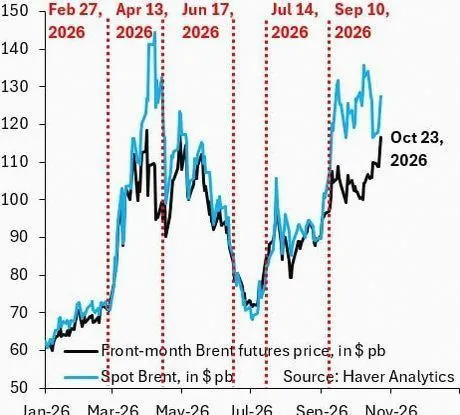
Oil markets have returned to a state of high tension as Brent crude climbed toward 117 dollars per barrel, nearly touching this year’s peak. This surge mirrors a period of intense volatility seen back in March, when fears regarding the Strait of Hormuz sent prices skyrocketing. During that initial wave of panic, analysts debated whether such steep climbs accurately reflected geopolitical risks or represented a market losing its grip on reality. Now, history seems to be repeating itself as traders react once again to the threat of instability.
Despite the current price spike, there is a glaring discrepancy between market valuation and physical reality. Supply coming out of the Persian Gulf has largely normalized, returning close to pre-war levels of roughly 20 million barrels per day. Because supply remains steady and global demand looks sluggish due to economic headwinds and debt crises in regions like France, the current price hike cannot be explained by basic economics. Instead, it appears that investors are baking in an aggressive risk premium based on the fear of a hot war breaking out.
Data suggests that this risk premium has reached an excessive level. When analyzing price elasticity and futures contracts, current valuations imply a catastrophic drop in Gulf supply that simply isn’t happening. While some justify the increase as a hedge against potential conflict following upcoming elections, it is unlikely that production would plummet far enough to sustain these costs long term. Long-dated futures remain relatively flat, suggesting that those betting on oil believe this is a temporary spasm rather than a structural shift in value.
Ultimately, while headlines might briefly push prices toward 125 dollars if tensions escalate further, there is little fundamental evidence to support a permanent climb beyond that point. Demand from major importers like China and India has barely recovered to pre-war levels, leaving no room for organic growth to drive prices higher. For now, Brent reflects more about investor anxiety and political speculation than it does about the actual availability or consumption of crude oil globally.