
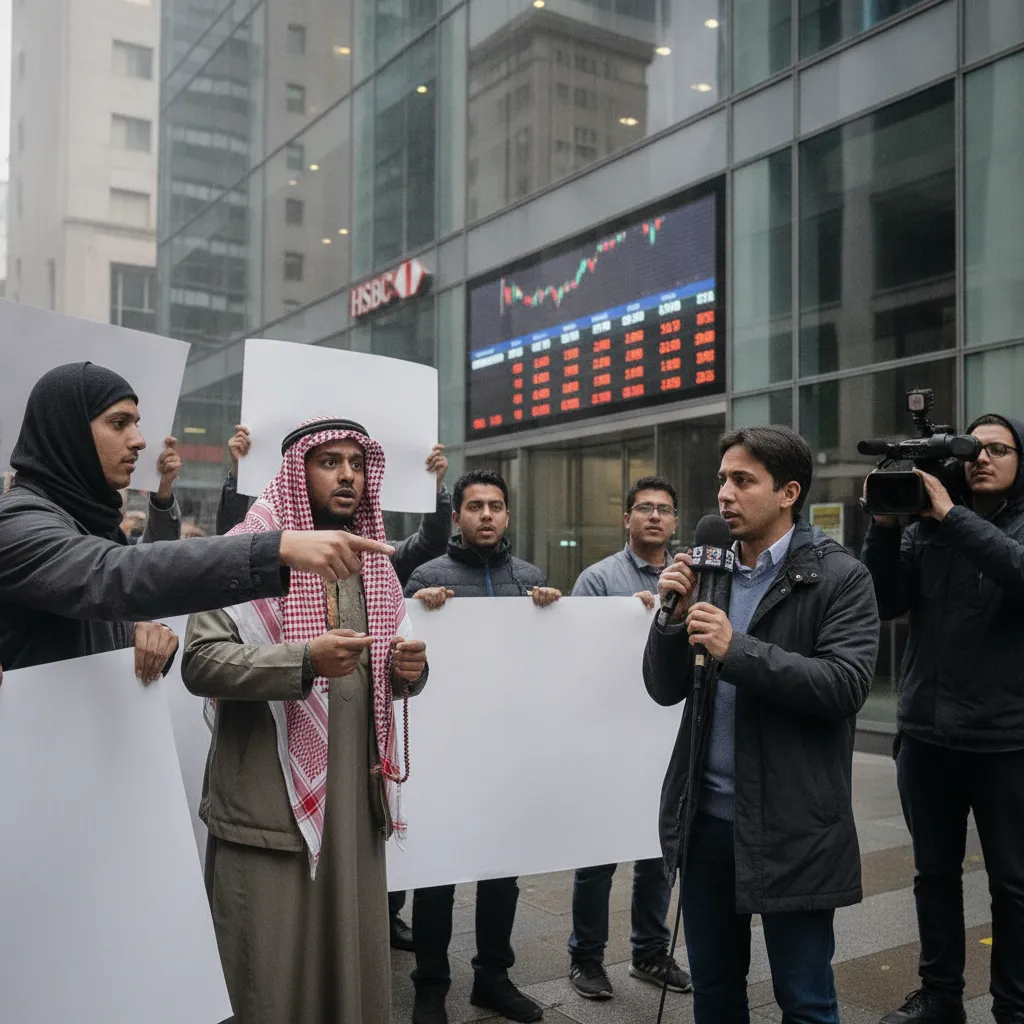
HSBC is facing intense scrutiny following revelations that its largest Islamic law compliant fund poured more than 130 million dollars into companies tied to the Israeli military. The Islamic Global Equity Index Fund, which manages over 8 billion dollars in assets, is designed to appeal to Muslim investors by filtering out industries that violate Sharia principles. However, recent analysis indicates the bank channeled massive sums into firms providing critical weaponry and surveillance technology used in conflicts across Gaza, the West Bank, and southern Lebanon.
Among the most controversial holdings are stakes in American tech giant Palantir and defense contractor RTX. Reports show the fund invested roughly 38 million dollars in Palantir, a firm whose AI driven data analytics tools have been linked by United Nations reports to targeting operations in Gaza. Additionally, around 35 million dollars went toward RTX, the parent company of Raytheon, which produces essential components for Israel’s Iron Dome defense system and other advanced missile technologies. These investments directly contradict the fund’s own guidelines, which state it avoids companies with significant exposure to prohibited revenue sources such as weapon sales.
Critics argue that this discrepancy exposes a systemic failure in governance and transparency within the Islamic finance sector. Wahyu Jatmiko, a lecturer at the University of Southampton Business School, suggested that the situation serves as a warning for the entire industry regarding how labels like Sharia compliant are applied. He noted a sharp tension between the bank’s marketing promises of enhancing society through ethical investment and the reality of funding entities involved in high scale military violence.
In response to the findings, an HSBC spokesperson acknowledged the importance of ensuring funds reflect investor values. The bank stated it takes these concerns seriously and has committed to reviewing its investment approach alongside independent experts to see if current practices align with client expectations. This internal audit comes as pressure mounts from activists and shareholders demanding greater accountability for where faith based capital is being deployed during active humanitarian crises.