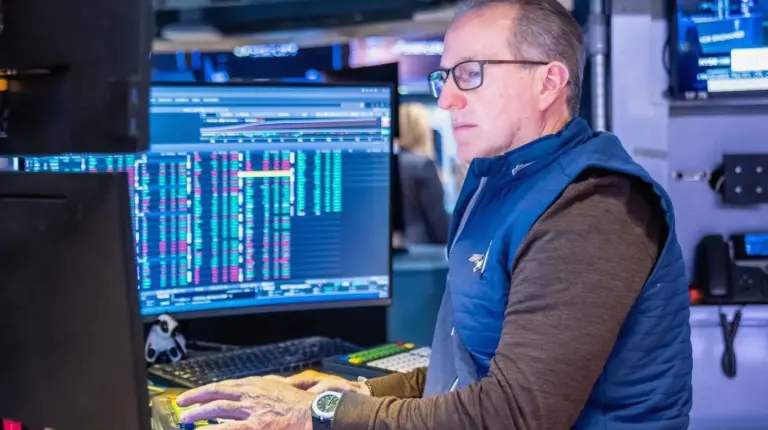
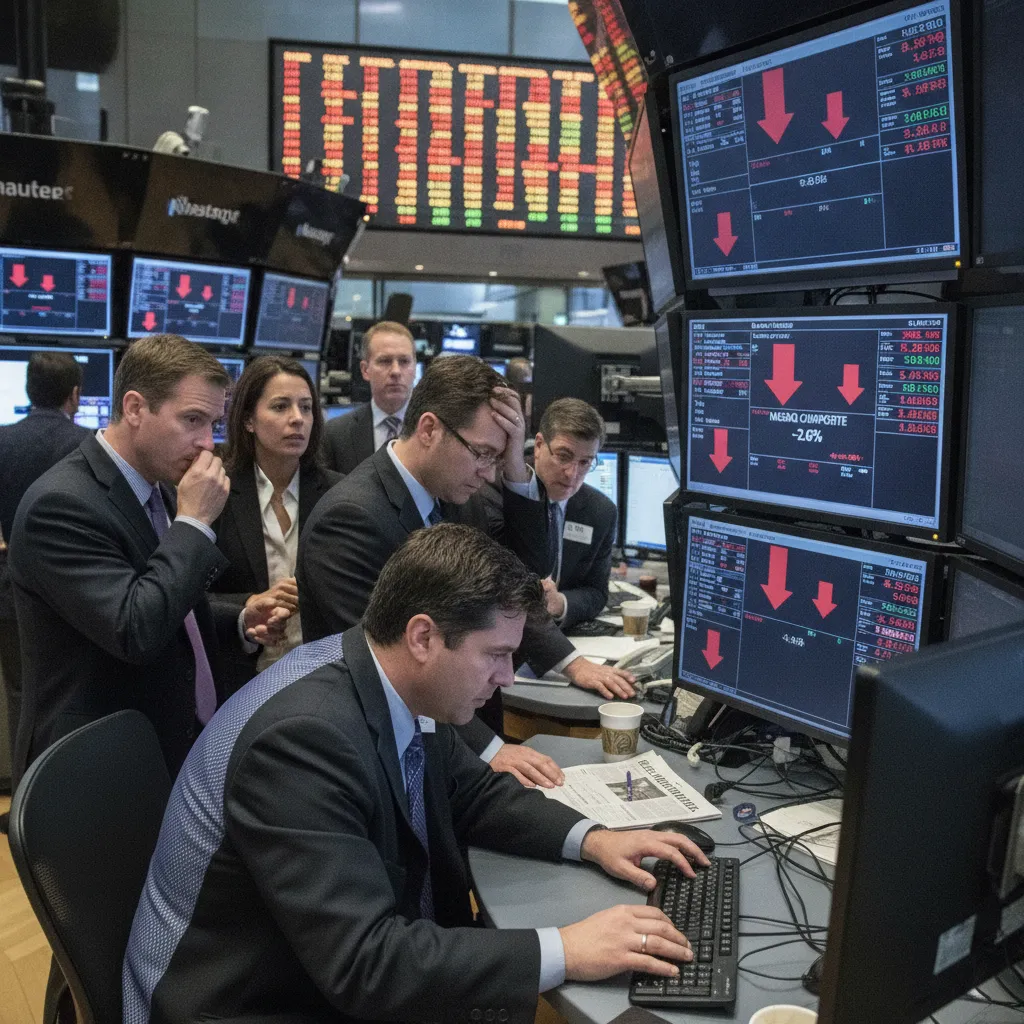
Wall Street experienced a sharp correction on Thursday as uncertainty regarding artificial intelligence spending triggered a widespread sell-off across the tech sector. The Nasdaq Composite took a significant hit, sliding 2.6 percent in its most dramatic decline since early June. This downward trend mirrored movements in the broader S&P 500, which dipped 1.2 percent as traders began to question whether the massive capital injections fueling the AI boom are sustainable or merely signs of an impending bubble reminiscent of the dot-com era.
The turmoil was felt most acutely among the so called Magnificent Seven, where almost every titan stumbled except for Apple. Meta bore the brunt of the volatility, plummeting nearly 7 percent after revealing plans to hike annual capital expenditures toward $145 billion despite profits falling short of projections. Other industry leaders followed suit, with Amazon, Nvidia, Tesla, and Alphabet all seeing their valuations shrink. The contagion spread further into hardware providers like Intel and AMD, both of which crashed roughly 8 percent as fear gripped those betting on chip demand.
Adding fuel to the fire were geopolitical tensions driving oil prices higher, with Brent crude climbing past $114 a barrel following instability involving Israel and Iran. This macroeconomic pressure spilled over into Asian markets on Friday, causing erratic sessions in Japan and South Korea before indices managed to stabilize slightly. While global forecasts suggest AI investment could soar to trillions by 2027, many investors are now pausing to wonder if these astronomical costs will ever yield proportional returns.
Despite the carnage, some experts believe this slump is more psychological than fundamental. Jay Goldberg of Seaport Research Partners suggested that current market swings are being driven by a giant wall of worry rather than tangible changes in business health. According to Goldberg, while there are valid questions about the long term trajectory of AI spending, the suddenness of the collapse reflects shifting investor sentiment rather than a breakdown in underlying corporate performance.